
How to 3D print a life-size Halloween prop
A 6 ft skeleton hand coming out of the ground stops people on the sidewalk. It's also very doable on a normal desktop printer. Here's how this one was made, and what to plan for if yours is going outside.
Pick a model that scales well
Chunky shapes scale up better than delicate ones. Bones, skulls, tombstones and monster hands work well. Thin details like fingers or claws turn into long, narrow pieces, which is fine, but expect more of them. Check the model's license before you print it, especially if you'll show it publicly.
Scale it and cut it into pieces
Decide on one finished measurement, usually the height, and scale to it. Make sure the model is standing upright first: many files are saved lying down, and "height" then scales the wrong side. Then split it into pieces that fit your bed. A 6 ft hand on a 256 mm bed works out to about 126 pieces; the full guide to printing bigger than your printer covers the cutting step in detail.
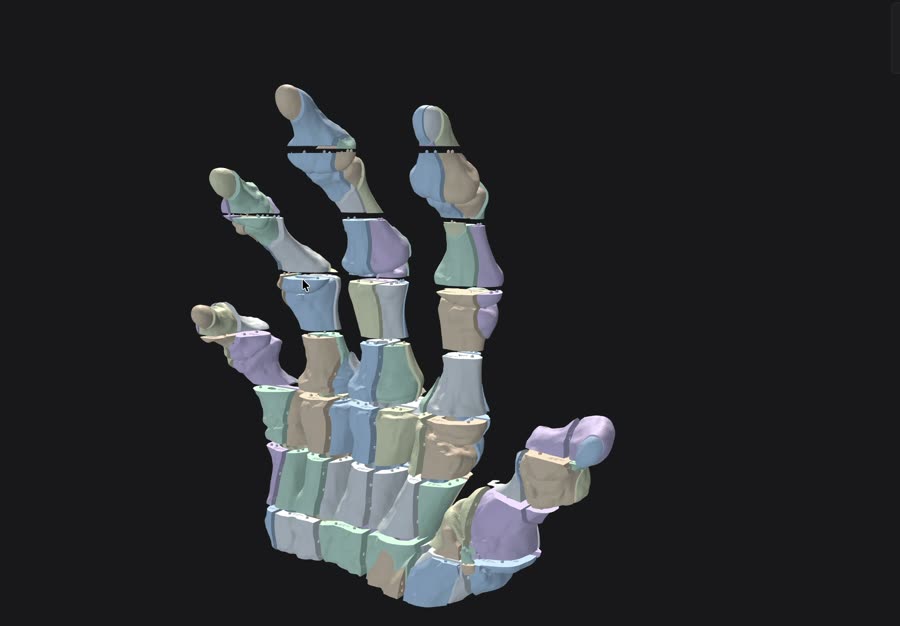
Hollow it
A solid 6 ft prop would use an enormous amount of filament. A hollow shell with thick walls is light, strong enough for display, and far cheaper. The hand used walls of about 2 inches (50 mm).
Print, assemble, and paint
- Print in build order. Start gluing the first sections while the rest are printing.
- Glue in sub-assemblies. Do each finger, then the palm, then join them. Epoxy is the safer choice for joints that carry weight.
- Fill and prime the seams. Filler putty, a sand, then a filler primer makes the cuts disappear under paint.
- Paint with exterior paint if it's going outside, then finish with a UV-resistant clear coat.
Making it survive outdoors
- Material: PLA softens in strong summer sun, but is usually fine for an autumn display. PETG or ASA handle heat and sunlight better if the prop will stay out longer.
- Weight: a hollow print is light enough to blow over. Anchor it with stakes, or set its base into the ground. The hand was planted in a mound of dirt.
- Water: seal the seams with glue or filler and leave a drain hole at the bottom so rain can't collect inside.
Let the app do the cutting
Scale & Cut 3D scales your model, cuts it into pieces that fit your printer, adds alignment pegs and part numbers, and lays everything out on plates for Bambu Studio and OrcaSlicer. One purchase covers Windows and Mac.
See pricingQuestions
How long does a giant prop take to print?
It depends on the model, size and printer, and it's usually measured in days of printer time. Hollowing it and running more than one printer shortens that a lot.
Can I leave a PLA prop outside?
For a few weeks in autumn, usually yes, especially once it's painted and clear-coated. In hot sun PLA can soften and warp, so use PETG or ASA for props that stay out in summer.
What's the best glue for a big prop?
Two-part epoxy for structural joints, and super glue (CA) to tack small pieces in place while the epoxy sets.